
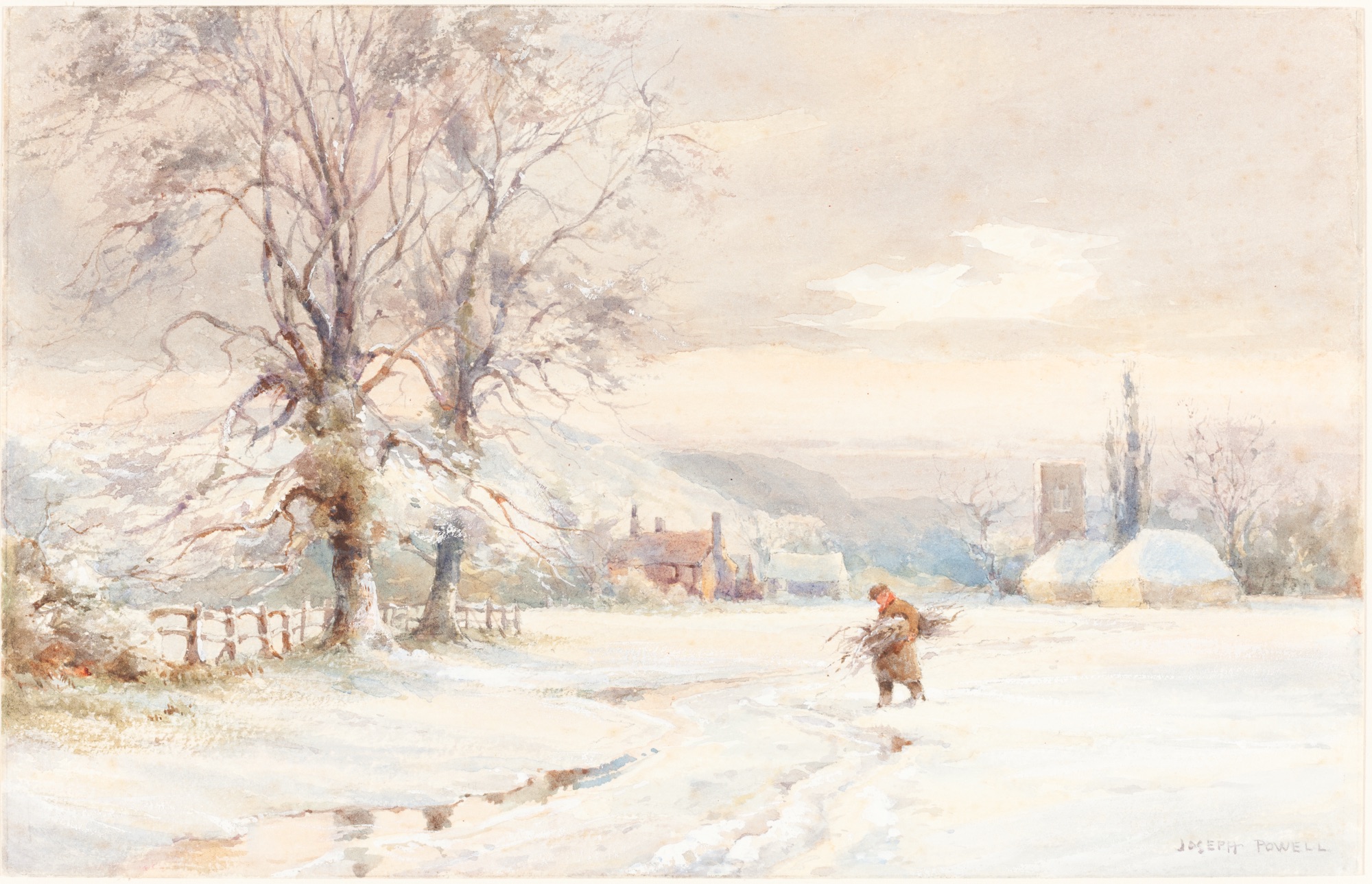
Recorded by K. Jameson
Warden of the Embers, Mistress of the Hearth
1934–1937
In accordance with the writ:
The story of the First Hearth begins on the eighteenth day of December, in the winter of 1894.
That winter, the Vales began feeding pieces of their lives to the cold.
First went the spare coins from Mr. Vale’s purse. Then the better cuts of meat disappeared from Mrs. Vale’s pantry. Supper grew thinner. Tea was brewed twice from the same leaves. At night, Mother and Father waited until the children had gone upstairs before deciding which bill could remain unpaid a little longer.
The cold had not yet come through the windows.
It did not need to.
By December, it had reached the coal scuttle.
Thomas Vale noticed this before anyone else, because Thomas noticed everything that happened near the hearth.
His left leg had never carried him properly. The surgeon who had examined him as a child had used several impressive words and then charged his father a guinea for them, but none had altered the essential fact: Thomas walked with an iron brace and a stout ash crutch, and stairs remained his sworn enemy.
So Thomas read.
He read because books could travel farther than he could.
He read histories, sermons, penny dreadfuls, old household remedies, bits of folklore, borrowed newspapers, and anything else that remained still long enough to be captured.
His sisters flew upstairs and down a dozen times a day. Thomas stayed near the fire with a book, a knife for whittling, and an excellent view of everyone else’s business.
At first he believed this merely made him well informed.
Then he began noticing things the books said he ought not to notice.
A candle flame that bent toward him when no window stood open.
A dying coal that brightened when he concentrated on it.
The faint warmth that sometimes gathered in his palm before he touched the iron poker.
Once, while reading an old collection of border tales, Thomas found a passage about people who could persuade a flame rather than command it.
He read that passage seven times.
Then he held his hand toward the hearth.
One small tongue of fire leaned in his direction.
Thomas closed the book.
He said nothing.
For three weeks.
This required considerably more discipline than the magic.
He experimented only when nobody was looking.
He discovered that he could not conjure flame from nothing.
He could not make wet wood burn.
He could not heat a room by wishing.
But sometimes, if a spark remained, he could encourage it.
Coax it.
Hold it a little longer than it seemed inclined to stay.
Thomas did not know whether this counted as magic.
The books disagreed.
Some called such things charms.
Others called them gifts.
One particularly severe minister called them wickedness, although Thomas noticed that the same minister believed in miraculous fires whenever they appeared in Scripture.
Thomas considered this inconsistent.
So he continued his experiments.
Quietly.
By December, Thomas knew two things with certainty.
The first was that he possessed some small inclination toward magic.
The second was that magic did nothing whatsoever about the price of coal.
That was why he counted the scuttle.
This made him, in his own estimation, the best-informed person in the house.
It also meant he knew precisely how much coal remained.
“Three days,” he announced.
His mother looked up from her sewing.
“Three days of what?”
“Fire.”
Clara froze with both hands poised above an imaginary piano on the tabletop.
“That’s dreadful.”
“It’s arithmetic,” Thomas said. “Arithmetic is often dreadful.”
Across the room, his father stood at the window with his hands clasped behind his back.
He had been staring at the same patch of grey sky for several minutes.
Thomas knew the difference between a man watching the weather and a man pretending to watch the weather so nobody would see his face.
“We shall manage,” Mr. Vale said.
Thomas lowered his knife.
There it was.
The great incantation of fathers.
We shall manage.
Men seemed to carry those words as soldiers carried rifles: always close at hand, often polished, and not necessarily loaded.
Mrs. Vale pulled another stitch through a shirt cuff.
“How?” she asked.
Mr. Vale did not answer immediately.
That was answer enough.
Thomas looked back at the coal scuttle.
Three days.
Perhaps four if they stopped pretending the upstairs bedrooms needed heat.
Two if the temperature dropped.
One if Clara continued opening the parlour door every five minutes.
“Stop that,” he said.
Clara, who had just opened the parlour door, stopped.
“Stop what?”
“Letting December in.”
She shut it with considerably more force than necessary.
Thomas glanced toward the hearth.
One coal shifted.
A thin flame rose from its edge.
He had not touched it.
He looked away before anyone noticed.
That evening the temperature fell.
Not dramatically.
There was no howling gale, no snowdrift swallowing cottages, no church bell frozen mid-ring.
Those details appeared later.
Storytellers have never been able to leave weather alone.
The truth was simpler.
Water hardened in the yard.
Frost climbed the inside corners of the kitchen window.
Mr. Vale came home rubbing his hands together and saying nothing.
Mrs. Vale served potatoes, onions and a thin slice of mutton divided so carefully that Thomas suspected mathematics had been involved.
Nobody mentioned coal.
The next morning Thomas counted again.
He counted twice.
Then a third time, because bad arithmetic occasionally improved when challenged.
It did not.
On the third evening, his father carried the last full bucket into the parlour.
Clara watched him from the rug.
Mrs. Vale stopped sewing.
Thomas set down his book.
Mr. Vale knelt beside the fire and tipped the bucket slowly.
Coal struck the grate one piece at a time.
Clink.
Clink.
Clink.
Each piece sounded expensive.
When the bucket emptied, Mr. Vale remained crouched beside the hearth for a moment longer than necessary.
Then he stood.
“There,” he said.
Nobody answered.
The fresh coal caught reluctantly.
Orange light climbed across the grate.
Clara’s mouth tightened.
Thomas saw the tears before she did.
“Oh, don’t,” he said.
“I’m not.”
“You are about to.”
“I can’t help it.”
“Of course you can. Cry tomorrow. We have enough water in the house tonight.”
A cushion struck him squarely in the chest.
Thomas caught it badly and nearly dropped his book.
Mrs. Vale laughed.
It escaped her before she could stop it.
Mr. Vale laughed next.
Then Clara did too, though she insisted she was still angry.
For a few minutes the room warmed for reasons that had nothing to do with coal.
Thomas remembered that part very clearly.
Later, people would say HearthWarming began with the fire.
Thomas disagreed.
He always said it began with the laughter.
The knock came just after eight.
Three slow blows.
Everyone stopped.
Mr. Vale glanced toward the window.
“At this hour?”
Another knock.
Thomas leaned forward in his chair.
“Well, unless the coal merchant has developed a flair for dramatic entrances, you might answer it.”
His father gave him a look and went to the door.
Cold air rushed into the hall the moment he opened it.
Mr. Bell stood on the step.
The baker had frost in his beard, flour on one sleeve and a sack tucked beneath his arm.
“Evening,” he said.
Mr. Vale blinked.
“Bell?”
“Thought you might be short.”
“Short of what?”
Mr. Bell looked past him toward the glow of the parlour fire.
“Everything, by the look of it.”
He stepped inside before pride could close the door.
Mrs. Vale came into the hall.
Mr. Bell placed the sack on the floor and opened it.
Two loaves of yesterday’s bread lay on top.
Underneath them, wrapped in coarse sacking, were six lumps of coal.
Mr. Vale stared at them.
“No.”
Mr. Bell sighed.
“Good evening to you too.”
“I mean we cannot take that.”
“You can.”
“You’ve a family of your own.”
“Yes. Very observant.”
“Bell—”
Mr. Bell picked up one lump of coal and pushed it into Mr. Vale’s hands.
“Put it on.”
Mr. Vale looked at the coal.
Then at his wife.
Then toward the parlour.
Thomas called from his chair.
“For heaven’s sake, Father, if you argue until morning we’ll need twice as much.”
Mr. Bell laughed.
Mrs. Vale covered her mouth.
Mr. Vale finally surrendered.
He carried the coal into the parlour.
Thomas shifted his chair to make room.
Mr. Bell remained standing until Clara dragged over a stool.
The first borrowed lump went onto the fire.
It caught quickly.
The flame rose.
And nobody in the room understood yet that this was the first thing brought to the First Hearth.
Leave a Reply